
Who we are
Led by people who have lived it.
Leading this work takes a rare pairing: people who have lived what those we serve are living, and the discipline to build an institution that lasts. Amparo is built to hold both — and to be a team, not a single person.
The leadership
Two people, one standard.
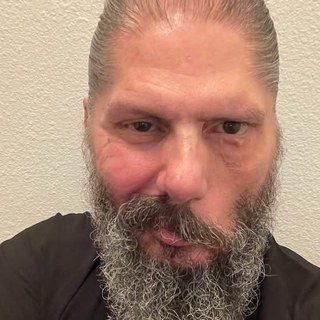
Founding Director
Robert “Atma” Meek
Decades at the intersection of reentry, homelessness, behavioral health, and recovery — paired with lived experience returning from incarceration, and a documented record of turning that combination into measurable results.
- Peer educator inside Texas state prisons for over a decade
- Certified Reentry Specialist · Harm Reduction Specialist
- Justice-Involved, Mental Health & Recovery Peer Support Specialist
- Trained Peer Support Supervisor

Associate Director · Co-Founder
Tina Athena Bowen
Co-founder and Associate Director, helping lead the project and its growth — with lived experience of her own and several years across reentry, mental health, disability, and homelessness services.
- Mental Health Peer Support Specialist
- Death doula
- Case manager across reentry, mental health, disability & homelessness services
- Practice experience including intimate-partner & family violence
The founder’s story
The model, in his own words.
Atma’s credibility is not theoretical. He returned to the community from incarceration, began rebuilding his life, and has been active in that community ever since — doing this work in various settings since 2003. His lived and living experience shows up as community service, in the same neighborhoods Amparo serves; the credibility of his message is lived every day rather than asserted. Alongside it, he brings a solid record as a strategist and leader within human-services nonprofits.
In his own words
I was once the person this work is for. It is the work I wish had been there for me when I was most vulnerable.
I grew up surrounded by anger, rage, and violence until it consumed my own life. Then my violence consumed the lives of others. After that, I went to prison, where violence was not an exception or an interruption — it was at the center of everything.
But it was there, in that place, that something in me finally woke up. I began the long work of healing, accountability, and change. My life did not change because someone threw me away. It changed because, somewhere along the way, I came to believe another life was still possible. That belief did not undo what I had done. It does not now. I carry both.
That is why I do this work now.
In his own words — the ground itself
The neighborhoods this work serves are the neighborhoods I have lived in. Over the past ten years I moved through much of the map our own analysis now marks as highest need — out of custody and into halfway houses on the south corridor and off Loyola in Northeast Austin, into the Rundberg corridor, through a year camped in the Johnson Creek greenbelt, across East Austin, and, for the last four years, home in Colony Park. I am not describing a caseload. I am describing an address history. The conditions this project names — incarceration and the long road back from it, housing that comes and goes, the pull of violence and the weight of having survived it — are not things I studied. They are things I carried, in these very places.
Montopolis is where that lived experience became work. I have spent the past few years doing outreach there, where I serve on staff at Esperanza Community, walking alongside people through the same passage I had made myself. That is the standing I bring to Amparo: not the authority of someone who has read about this population, but the credibility of someone who is of it — who has stood where the people we serve are standing, on the same streets where we intend to stand with them. The people still in these neighborhoods are not statistics to me. They are neighbors.
Rooted in community
Of the community, by the community, for the community.
Amparo is a project of the community, by the community, for the community. The people we serve are our neighbors, and the people who lead come from the same streets and the same experiences. Community surrounds this work, lives within it, and carries it out — among us, within us, and as us. Without the community, there is no Amparo Peacemaking Project.
So we are building that belonging into the institution itself, in phases: an advisory committee first — carrying expertise, community credibility, and survivor, lived, and living experience; a lean founding board holding fiduciary authority at incorporation; and, over time, a matured governing body that seats survivors and people with lived and living experience in real decision-making roles.
Alongside it, a research function that measures our outcomes honestly, and a commitment that leadership tells its own story plainly, and first — so this is never one person’s redemption story, but the community’s own.